
Social Media has been a useful tool for journalists, but that does not mean journalists do not need to be careful on social media. Twitter can be a great place for journalists to crowdsource, connect with their audience, and share their personality. However, twitter also means having to deal with internet trolls, accidentally oversharing, and many other problems. Therefore, journalists need to strike that delicate balance between more personal but still professional.
Responding to comments while dealing with Trolls:
News Media Alliances’ piece “How To: Use Twitter to Your Advantage as a Journalist” talks about how journalists can use social media to respond and engage with followers, but when doing so must try to ignore internet trolls. Internet Trolls are people that use the internet to spew hate and harass others online. The Times piece “How Trolls Are Ruining the Internet” talks about how these internet trolls feed off of attention. Journalists are a big target for internet trolls and therefore it is recommended to do their best to ignore them and not engage, while also still engaging with the non-troll comments both negative and positive.
Share your personality but be cautious with what you share:
Another place journalists have to strike the appropriate balance while using social media outlets like twitter is sharing the right amount of personal information. People love to feel connected with the people they get their news from, but for professionalism and journalistic integrity there are boundaries and limits to what journalists should share on social media.
A tweet here and there from a journalist about their lives or a quick joke or piece of art they liked helps make the journalist become more relatable. However, with such a big audience journalists must be careful in what they post online. For example, a journalist posting their personal political beliefs when they are supposed to be neutral can spark criticism and controversy for both the journalist but also the outlet they represent.
News Outlets Giving Social Media Rules to their reporters:
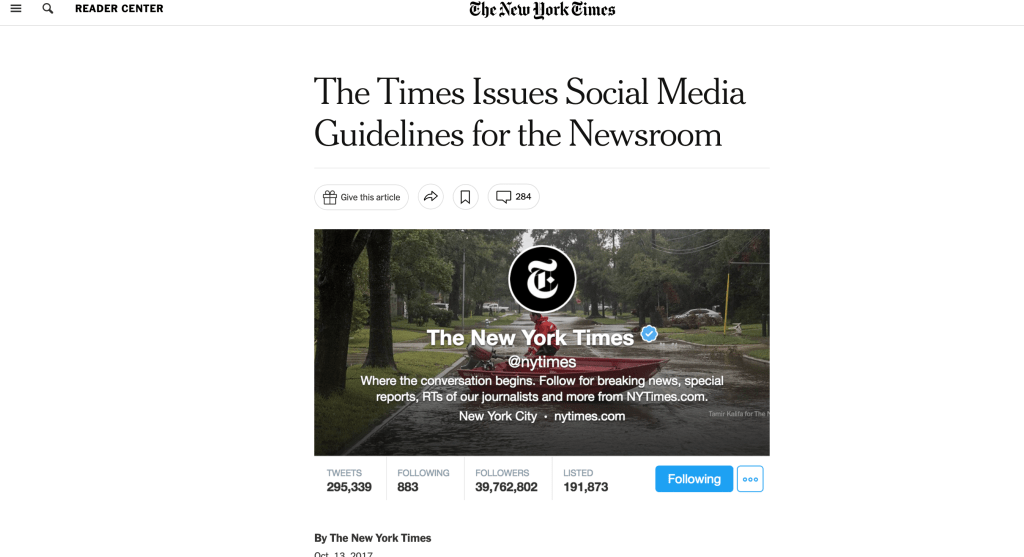
Some news outlets have rules and guidelines for how their journalists must conduct themselves on social media. For example, The New York Times issued Social Media guidelines for their newsroom back in 2017. These rules included not posting New York Times exclusive pieces to personal social media, not complaining about customer services online, and many more.
Social Media outlets such as Twitter give many new resources and tools for journalists to expand their work. However, the great power social media gives journalists also requires great responsibility. It is paramount that journalists are able to find a good balance between using social media and maintaining professionalism.
 Social Media in PR and Journalism
Leave a comment